

calling for a national effort on cycling safety.
Norway considers lower speed limits on popular cycling training roads:
"An important signal for everyone who rides"
Ten cyclists have died on Norwegian roads so far this year. The Norwegian Public Roads Administration is now considering cutting the speed limit from 80 to 60 km/h on roads popular for cycling training, and is calling for a national effort on cycling safety. Norseman wants to take part.
On Wednesday 23 September, the Norwegian Public Roads Administration announced that it is considering urgent measures to make cycling safer. The main proposal is a lower speed limit on stretches where many cyclists train. It also wants to trial lower speeds combined with digital speed signs.
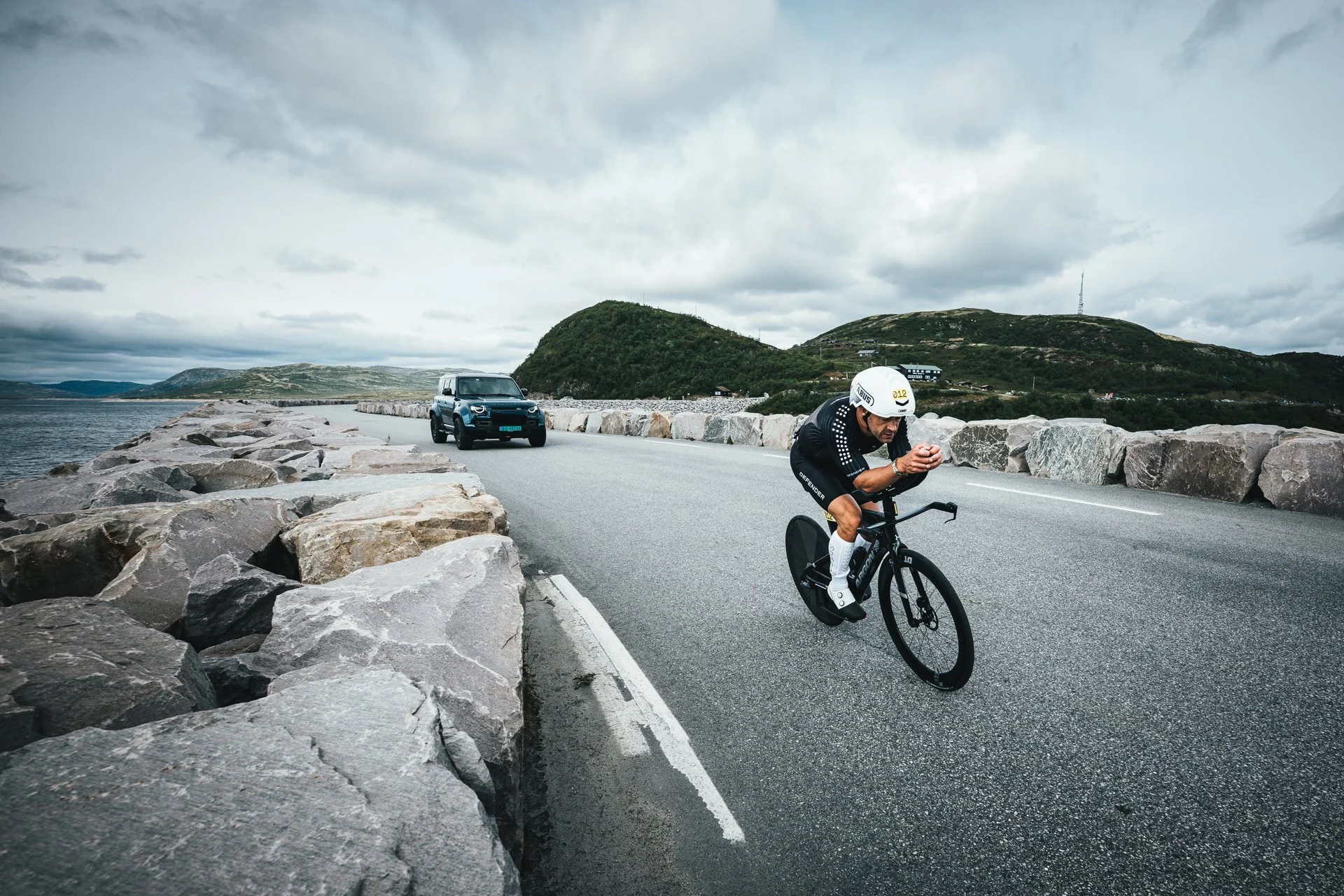
Norseman athlete passing Imingfjell Dam. Photo credit: Hans Kristian Krogh Hansen / Defender
Part of every triathlete's training
For triathletes, this is about much more than traffic rules. Six months of preparation for Norseman means thousands of kilometres on the bike, and most of them are ridden on ordinary country roads shared with cars.
"Everyone training for Norseman knows the feeling of a car passing at 80 km/h with just centimetres to spare. It's a normal part of training, and it shouldn't be. The Roads Administration taking action now sends an important signal," says Norseman race director Fredrik Mandt.
"Ten cyclists killed in nine months is ten too many. Behind every one of those numbers is a family, a club and a training community. It affects all of us."
Norseman is raced on open roads
The Norseman bike course runs 180 km from Eidfjord, across the Hardangervidda mountain plateau and on towards Austbygde in Telemark, on roads that stay open to regular traffic. Athletes must follow the traffic rules, and sharing the road with drivers is part of the race.
"We know how much it matters when drivers and athletes respect each other. We work closely with the police, the Roads Administration and the municipalities along the course to make race day as safe as possible. But athletes take most of the risk in the months before, training alone on the roads near home," says Mandt.
Norseman joins the national effort
The Norwegian Public Roads Administration has invited clubs, organisations, events, road safety groups, county authorities and others to help choose stretches for trials, measure how well the measures work and roll out the ones that do.
"We're in. Norseman and the triathlon community know where people actually train and where it feels most dangerous. We're happy to share that knowledge," says Mandt.
"Those of us who ride have to do our part too. Ride predictably, use lights and wear visible clothing, and save your hardest intervals for quiet roads at quiet times. And we're drivers too. The next time you pass an athlete, give plenty of room and wait until it's safe to overtake." says Mandt.
Read the entire press release (in Norwegian) here: https://www.vegvesen.no/om-oss/presse/aktuelt/2026/09/vurderer-strakstiltak-mot-sykkelulykker/
