

Safer roads and stricter cut-off times
Some things never change. The ferry and the jump into the Hardangerfjord at 05:00. 226 kilometers and more than 5,000 vertical meters to the top of Mount Gausta. Your support team beside you all the way. But still, we will call next years edition: Norseman 2.0.
Many things have changed since the first Norseman in 2003. The Police require changes that affect Norseman. To improve safety, traffic needs to be reduced. This means we will close certain sections on the bike and run course for non-accredited vehicles.
Cut-off times must be tightened significantly to shorten the period the roads need to be closed. Stricter cut-off times are not our choice as organisers. They are a condition for being allowed to use the roads in 2027.
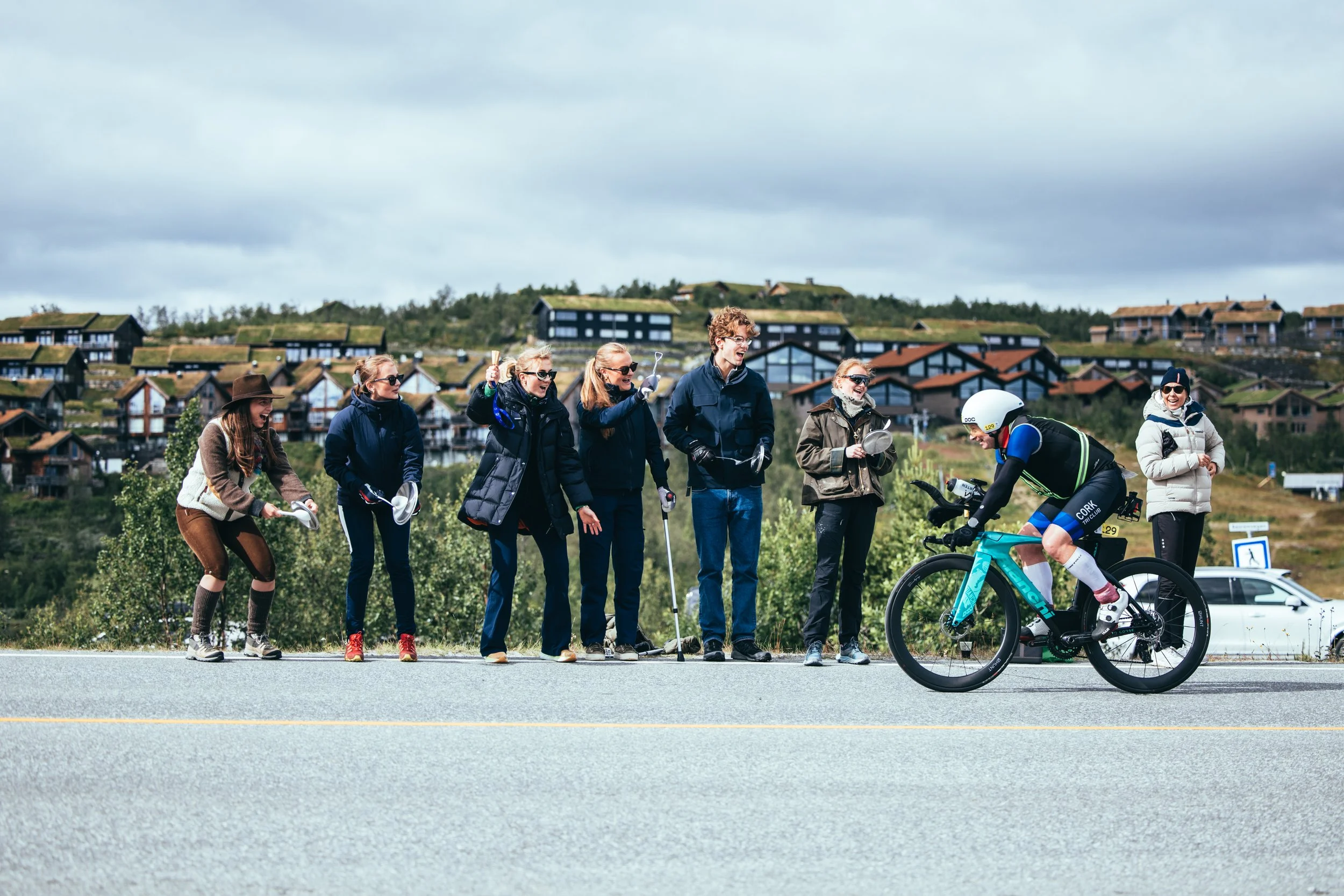
Norseman athlete passing spectators on race day. Photo credit: Sylvain Cavatz / nxtri.com
Why we are doing this
Norseman runs on open public roads, with permission from the police and the Norwegian Public Roads Administration. Without that permission, there is no Norseman.
Every year, the traffic along the course on race day has grown. On top of the athletes’ own support cars, more and more other vehicles now drive the course from Eidfjord to Gausta on race day. On narrow mountain roads, that means longer queues, more overtaking and less room for the athletes on the bike and run. Together with the police and the road authorities, we have concluded that the traffic has to come down. That is how Norseman can stay safe and maintain its permits.
Safe. Fair. Fun. Always in that order.
“Norseman has always been a journey you share with your support team, and that will not change. What changes is the traffic around the race. We would rather make Norseman tougher and safer than risk losing it,” says Fredrik Mandt, Race Director.
What changes in 2027
Fewer vehichles in the course. The police strongly recommend to close sections of the bike and run courses to non-accredited vehicles on race day.
Your support car still follows you. Every athlete still has one support car and a support team of one or two people. Support cars are accredited through the Norseman stickers and will have access to the closed sections. All support rules in the Race Manual still apply.
New spectator zones. Friends, family and other fan clubs who are not in a support car will not be able to follow the race along the course by car. Instead, we are creating spectator zones with our partners where you can get close to the race and see the athletes pass.
Stricter, and more cut-off times. Roads can only be closed for a limited time, so the whole field has to move through each section within set time windows. That means new and stricter cut-off times, at more places on the course (see table for new cut-off times in the race manual). Stricter cut-off times are not our choice as organisers. They are a condition for being allowed to use the roads in 2027.
Let’s be honest about what this means. With the 2027 cut-offs, 12 finishers from 2026 would have been stopped before the run. If swimming or cycling are your weak spots, Norseman 2027 will be hard. Take that into account before you enter the ballot.
What athletes will get in return:
Safer roads. Fewer cars on the climbs, the descents and the narrow roads.
A fairer race. Fewer car queues and less traffic deciding your race.
A better day for spectators. Spectator zones built for watching the race, not for chasing it.
All details can be found in the race manual 2027. Read the manual. Then decide.
The start slots
A total of 335 start slots will be allocated for the 2027 edition of Norseman Xtreme Triathlon. Based on past experience, this will leave us with around 250-255 athletes on the start line in Eidfjord on race day.
An overview of how all 335 start slots are allocated and how to get one is here.
Questions? Take a look at the FAQ.
